
People Don’t Perform in a Vacuum
By Jill Barrett, Evolve Impact Founder & Managing Partner
Years ago, when I first started Evolve, I had a page on our website called Workplace Design. I had a strong intuition that the places and conditions in which people work have a profound effect on how they feel, relate, think and perform. I imagined Evolve helping organizations create environments where people could do excellent work and also be well.
I loved the idea. I had absolutely no idea what to do with it. So, eventually, Workplace Design disappeared from our website.
Lately, I find myself returning to it. Not necessarily as a service we are ready to offer, but as a question that increasingly matters to me: What if we paid as much attention to creating the conditions in which people can thrive as we do to improving the people themselves?
We Keep Working on the Person
Organizations invest enormous resources in changing people. We coach leaders. Train managers. Conduct assessments. Teach communication skills. Develop competencies. Offer mindfulness programs. Ask people to become more adaptable, collaborative, innovative and resilient.
I believe in much of this work. It is, after all, what I have spent a good part of my career doing. But I've become increasingly aware of the assumption underneath it: the person is the thing that needs to change.
Think about an employee who is struggling to concentrate. We can teach her attention-management techniques, coach her around boundaries and encourage her to meditate, exercise and get enough sleep. All useful.
But what if she spends her days moving between back-to-back meetings, Slack messages, email, text messages and an open office where people interrupt her constantly? At some point, shouldn't we become curious about the environment?
Our Environments Are Acting on Us
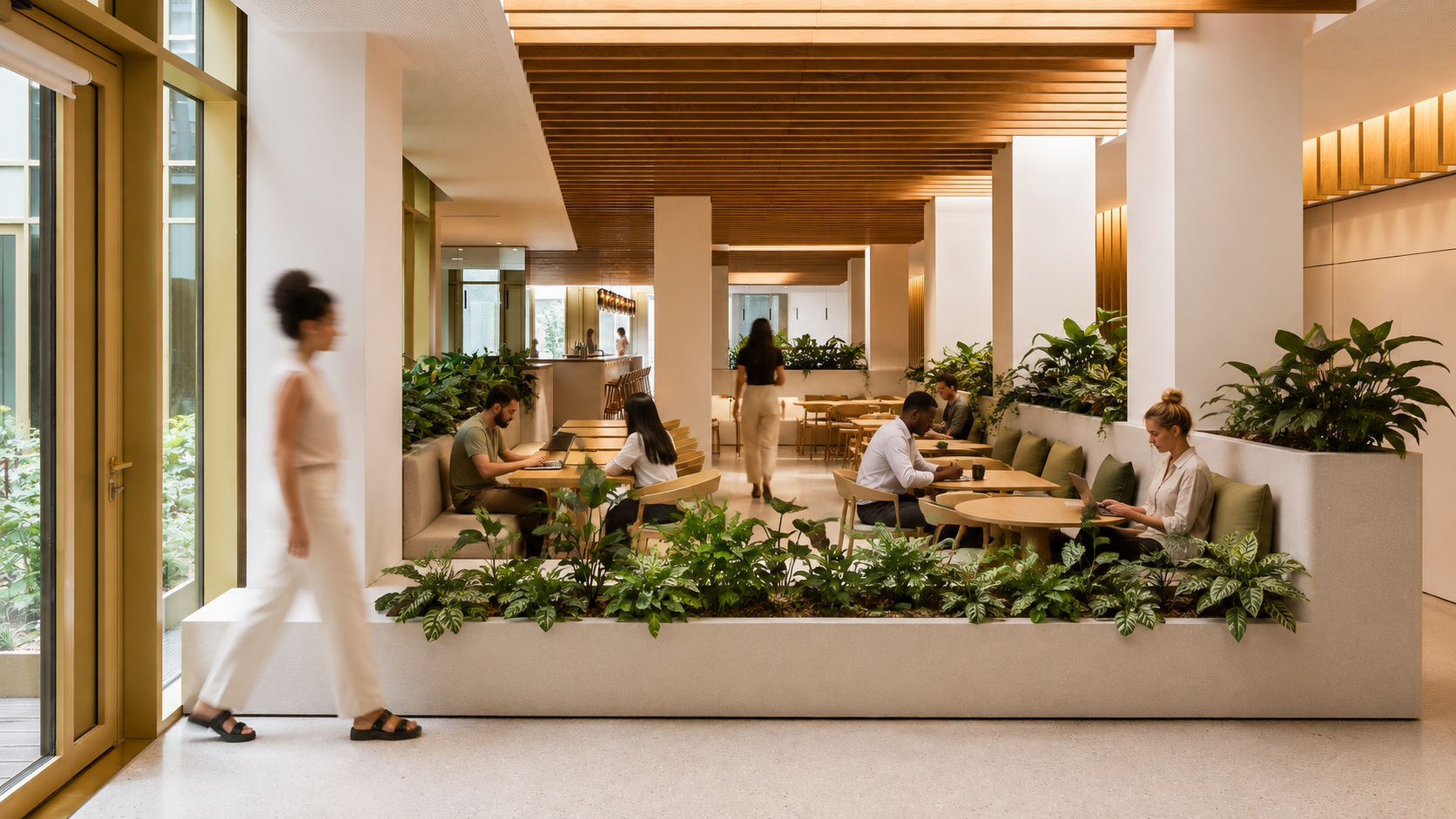
I don't think we fully appreciate how much our surroundings shape us. Some of us need quiet to think. Others discover what they think by talking with someone. Some people become more creative when they move. Some need to sit very still. One person needs time to absorb information before responding. Another comes alive through the immediacy of an exchange. Some of us love an open room filled with energy. Others slowly lose access to themselves in one.
Even the same person can need very different conditions depending on what she is doing. I certainly do. The conditions I need to write are different from the conditions I need to coach, facilitate, strategize or handle administrative work.
And yet we have designed much of work around surprisingly uniform assumptions about what people need: same hours, same meeting structures, same expectations about responsiveness, same physical spaces, same definitions of productivity. Then we wonder why some people flourish and others struggle.
Maybe capability isn't simply something a person possesses. Maybe our access to our capabilities changes depending on the conditions around us.
The Environment Is More Than the Office
Of course, workplace design isn't only about architecture. A gorgeous biophilic office with abundant daylight and quiet rooms won't fix a team where no one feels safe enough to disagree. A flexible work policy won't help much if people are afraid that using it will damage their careers. A meditation app is a peculiar response to chronic overload. And asking someone to become more resilient while leaving unnecessarily harmful conditions untouched seems, increasingly to me, like a strange organizational bargain.
The environment includes the physical space, yes. But it also includes the relationships, norms, structures and everyday practices surrounding a person.
Who gets heard in a meeting? How much uninterrupted time do people have to think? Can someone say, "I don't know"? What happens when a person makes a mistake? Does everyone need to be involved in every decision? Can people work differently from one another without one way becoming the culturally preferred way? Does the organization recognize the natural rhythms of energy and attention, or is every hour treated as interchangeable with every other hour?
These aren't small questions. They shape what people can access in themselves.
A Different Way to Think About Performance
This has implications for leadership. If someone on your team isn't performing as you expected, the obvious question is: What's going on with this person? It is an important question. But I would add a few others:
What conditions bring out this person's best?
What conditions make it harder for them to access that?
What are we asking this person to continually override in order to succeed here?
Which parts of the environment can we change?
Which parts genuinely cannot change, requiring the person to develop new capacity?
That last question matters. I am not arguing that organizations should endlessly rearrange themselves around everyone's preferences. Work asks things of us. Development often requires discomfort. Sometimes the environment isn't the problem. Sometimes we really do need to become more skillful, flexible or capable of staying present when circumstances aren't arranged to suit us.
The interesting work is discerning the difference.
What Architects Already Know
Perhaps this is one reason I have become so interested in the architecture, engineering, construction and design industries. People who design and build things understand that environments influence behavior.
A staircase invites movement. A courtyard invites gathering. A window changes our relationship to what is outside. Materials affect how a space feels. Light changes throughout the day. A building can orient us toward one another or keep us apart. The best designers don't simply ask whether a building functions. They ask what kind of experience it creates for the people who inhabit it.
I find myself wondering what would happen if we brought that same quality of attention to organizations. What kinds of conversations does this organization invite? What behaviors does it make easier? What does it make unnecessarily difficult? Where can people gather, and where can they retreat? Where is there room to experiment? Where can they tell the truth? Where can they think?
And, perhaps most importantly, what kind of human being does this workplace quietly ask a person to become?
Returning to an Old Idea
When I put Workplace Design on the Evolve website all those years ago, I wasn't trained in architecture or workplace strategy. I'm still not, and I don't want to pretend to know things I don't know.
What I understand much better now is the human side of the question. I have spent years sitting with leaders and teams, paying close attention to what helps people become more present, more creative, more connected and more capable of doing difficult things together. I've also seen people blame themselves for struggling in environments that would deplete almost anyone. And I've seen people blame the environment when their own development was asking something uncomfortable of them. Both happen.
So I am returning to my old curiosity with considerably more humility and many more questions. We know that people shape organizations. I am increasingly interested in the other half of that relationship: how the organizations, relationships and physical environments we create are shaping us.
What would become possible if we stopped asking people to do all of the adapting? What if we became equally curious about how work could adapt to human beings?
I don't yet know exactly where that question will lead Evolve. But I know I want to follow it.