
The Spaces That Shape Us
By Jill Barrett, Evolve Impact Founder & Managing Partner
When I was a child, I endlessly designed rooms and artifacts for my dolls out of whatever I could find around the house: scraps of fabric, old wallpaper, magazines, cardboard from the backs of notepads.
I didn’t know it was design. I just wanted to make spaces that felt alive for my dolls.
Later, I became drawn to Frank Lloyd Wright. I was attracted to his reverence for nature and especially to the influence of Japanese aesthetics on his work. His organic architecture offered a different relationship between buildings and the landscape: structures could belong to a place rather than simply occupy it.
Over the years, I found myself profoundly moved by architects, designers, builders and developers who seemed to approach their work with a similar sensitivity. People who respected the land, site, heritage, culture and communities surrounding a project. People who built with local materials, local hands and local minds. Sometimes they didn’t even uproot a single tree.
I love what Carlos Couturier, cofounder of Grupo Habita, said of his work on Hotel Terrestre in Puerto Escondido, Mexico:
“Creating a sanctuary…and little by little you become ego-free. It’s about freedom...so life truly flourishes. Returning to the rhythms of the earth. [Here I can] reconnect with the universe and rediscover who I am.”
There is something in that idea I keep returning to.
A place is never simply a container for human life. It participates in our experience of being alive.
The People Behind the Places
I could never have guessed that, decades after making those tiny rooms, this earlier childhood impulse would converge with my professional life.
Evolve began working increasingly with organizations across architecture, engineering, construction and design. At first glance, my work developing leaders and organizations might seem far removed from the physical work of designing and building places.
I have come to see them as intimately connected.
The people shaping our buildings, neighborhoods and cities are themselves working inside organizations. They are influenced by leaders, relationships, cultures, structures, economic pressures, technologies and ways of working. All of that shapes what they are able to notice, imagine, decide and ultimately create.
What happens inside an organization eventually finds its way into what that organization puts into the world.
That idea has become increasingly important to me.
A brilliant architect still works in relationship with other people. An engineer exercises judgment within organizational and commercial realities. A project team operates within structures of authority, trust and decision-making. A firm’s ability to adapt affects what it can create. The quality of leadership influences the conditions under which all of this work happens.
The human and organizational life behind the built world matters because it does not stay behind the scenes.
We eventually encounter it in the world around us.
Shaping Work
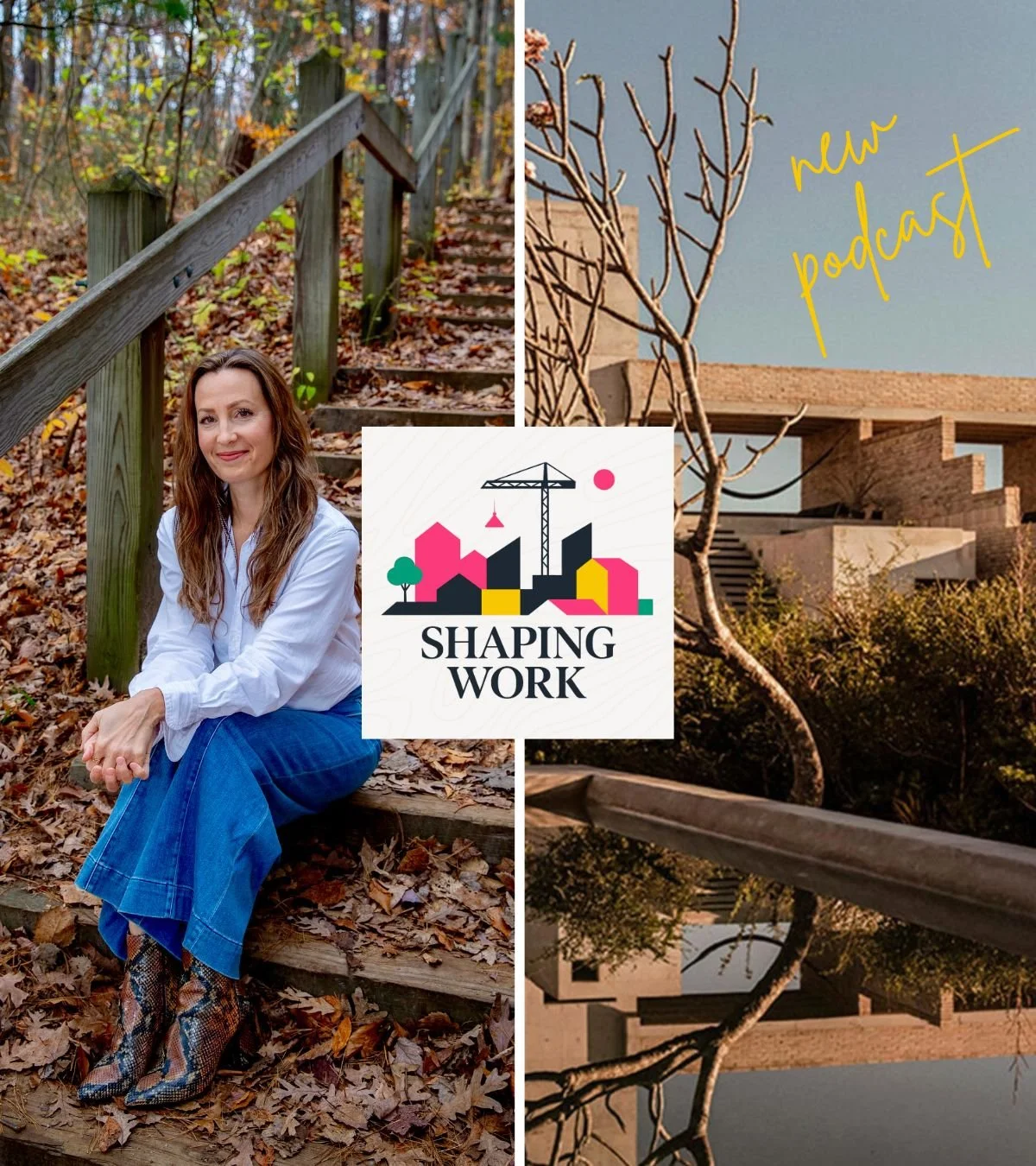
This ongoing conversation between space, nature, people, organizations and purpose led us to create Shaping Work, a podcast about the human side of shaping the places where we live and work.
I sit down with architects, designers, entrepreneurs and thinkers to explore not only what they create, but how they work, lead and think about their responsibility to people, place and the larger systems their work touches.
The name carries a double meaning that has become increasingly interesting to me.
We shape our work.
Our work shapes us.
And for people working in the built world, that exchange extends even further. Their work becomes part of the physical environment that will, in turn, shape the lives of people they may never meet.
Decades after making tiny rooms from scraps of fabric, wallpaper and cardboard, I find myself still interested in some version of the same question:
What makes a place feel alive?